DMG Masonry builds retaining walls in Calgary. A retaining wall holds back soil on a slope, controls where water goes, and makes the ground above and below it easier to use. We build them with proper drainage and a clean finish that suits your property.
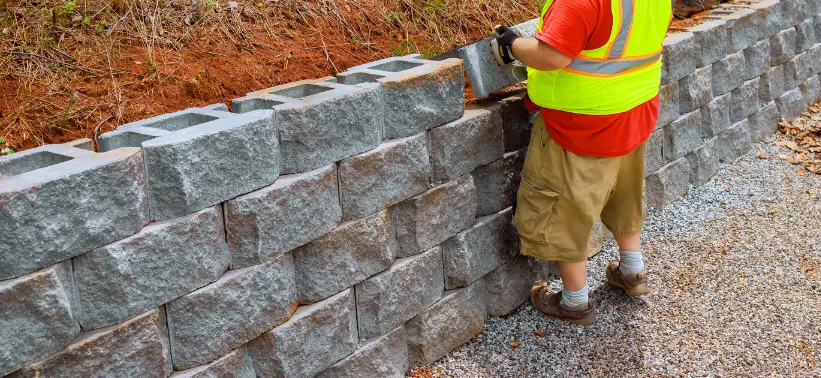
A well-built retaining wall holds the soil in place. It reduces the erosion and water problems that can undermine a slope over time. We plan each wall so it does that job and looks right in your yard.
A wall can also give a yard shape. It can level off a garden bed, create a terrace, or separate one area of the yard from another.
 Holds back soilBuilt to lastDrains properlyFits your landscape
Planning decides how well a wall performs. Before we build, we check the soil, the grade, how water flows and the layout of the site, then choose the wall that suits the property. Retaining walls are often one part of a bigger hardscape project, with a patio or steps above or below the wall.
We build with natural stone, concrete block and modular wall systems, whichever fits your site and the look you want.
A good wall depends on solid site preparation, the right materials and consistent workmanship. The base and the drainage behind the wall do most of the work.
According to the City of Calgary:
The current rules, fees and timelines are on the City's fences and retaining walls page.
 1
We check the grade, drainage and soil.
 2
We plan the layout, the materials and what the wall needs to hold back.
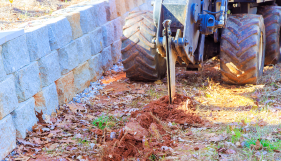 3
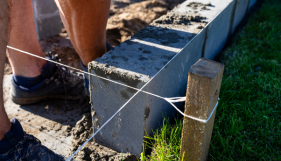
We build the wall with durable materials and proper methods.
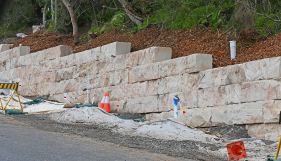 4
We finish the details so the wall is solid and neat.
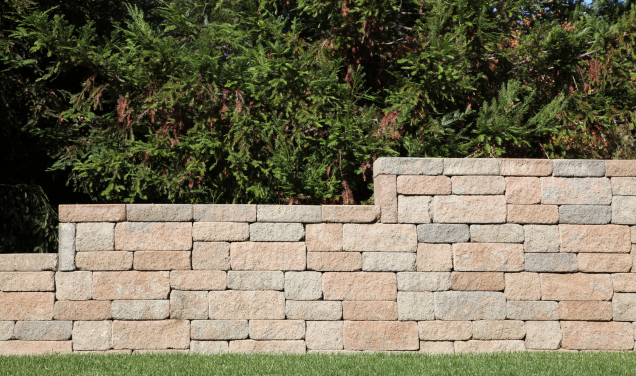
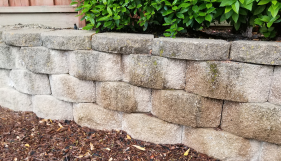
Engineered block units that lock together without mortar. They are the most common retaining wall in Calgary because they allow drainage through the wall, can be curved or stepped to follow a slope, and tolerate small ground movements without cracking.
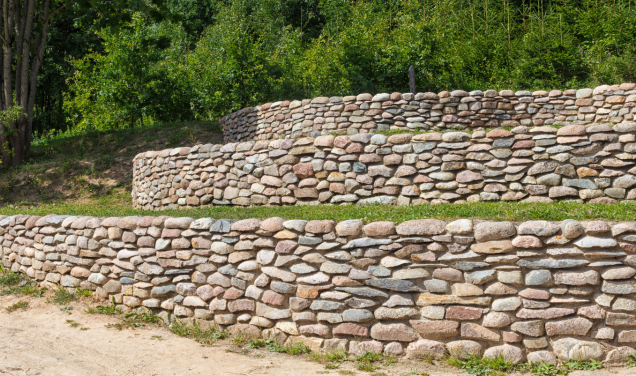
Large quarried stone or boulders set into a slope. These suit terraced and naturalised landscapes and can look considerably less engineered than block, which is usually the point. They need machine access to build.
Used where the structural demand is high or the space is tight. Strong and long-lived, but less forgiving than block and typically clad afterwards in stone veneer if appearance matters.
Timber walls are cheaper to build and are the ones we most often get called out to replace. In contact with wet soil through repeated freeze-thaw cycles, they have a much shorter life than masonry.
Signs a retaining wall is failing:
Almost every failure starts with water building up behind a wall that can't drain.
If one section has moved, it can often be taken down, the drainage behind it rebuilt, and the section put back. If the whole wall is leaning, or it's an old timber wall that has rotted, rebuilding is usually the safer and cheaper long-term fix. We often replace failing timber walls with block or natural stone. A wall that holds up a driveway, a fence or a building should be checked sooner rather than later.
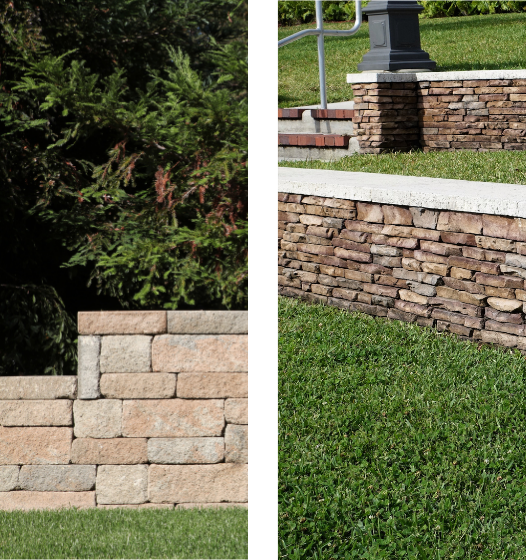
A retaining wall makes uneven ground stable and usable. We build walls for homeowners and commercial properties in Calgary, with proper drainage and a clean finish.
 Stabilizes uneven groundMakes your yard more usableBuilt with durable materialsSuited to the surrounding landscapePart of a full hardscape plan
It depends on the height. In Calgary, a residential retaining wall that holds back 1.2 m (4 ft) or more of soil generally needs City approval, and walls built close together are counted together. Lower walls usually don't. Rules change, so we check the current requirements for your property and help coordinate approvals when they're needed.
Engineered block is the most common in Calgary: it drains through the wall, can be curved or stepped, and tolerates small ground movement. Natural stone and boulder walls suit terraced, natural-looking yards but need machine access. Poured concrete suits tight spaces and high loads and is often finished in stone veneer. Timber is cheaper, but rots much sooner in wet soil.
Water is the main thing that pushes a wall over. If it can't drain, pressure builds up behind the wall and can affect its stability. We plan drainage into every wall.
Most failures come from water: no drainage behind the wall, so pressure builds up and pushes it over. A poorly compacted base, walls built too tall for their design, and timber that has rotted are the other common causes.
It depends on the height and length, the material, the drainage needed, and access to the site. Taller walls also need more base work and may need engineering. We quote after seeing the slope.
A wall built with good drainage, quality materials and sound methods can stay stable for many years. How long also depends on the site and on upkeep.
Most walls take one to a few weeks, depending on length, height and site conditions. We'll give you a more exact timeline once we've seen your property.
Timber costs the least to build, but in wet Calgary soil with freeze-thaw it usually needs replacing much sooner than masonry. Over the life of the wall, segmental block is often the better value.
Sometimes. If one section has moved because water built up behind it, that section can be taken down, the drainage fixed and the section rebuilt. If the whole wall leans or the timbers have rotted, rebuilding is usually the safer and cheaper long-term fix. Have it checked before it gets worse, especially if it holds up a driveway, a fence or a building.
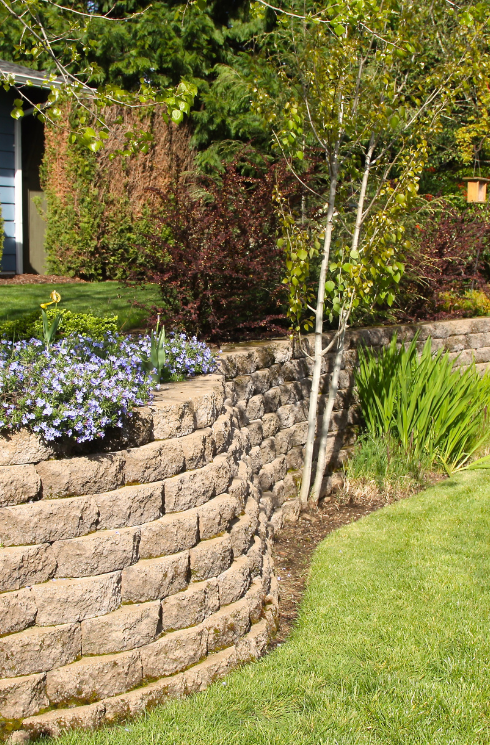
Tell us about your slope and what you want the wall to do. Call 1-403-619-8727 or fill in the form.
© DMG Masonry. Crafted spaces, built to last.